
Inside the Muskegon County Most Wanted Program
A most wanted program is a short, hand-picked list an agency uses to draw public attention to a handful of people it wants to find. It works as a public information tool, not a full record. The Sheriff's Office in Muskegon County posts no dedicated most wanted roster, no reward schedule, and no fugitive-of-the-week page. What the sheriff does publish is a custody lookup, records and FOIA access, jail information, and a way to submit a tip. So the official Muskegon County channels carry no list of names at all.
No Public Muskegon County Warrant Roster
Muskegon County publishes no public warrant roster and runs no most wanted list or reward program on the county or sheriff pages. That leaves the channels that do exist for a real answer. The 60th District Court holds adult criminal and traffic files. Circuit Court Records holds felony files after bindover. The Friend of the Court handles support and family contempt, and the county FOIA form reaches agency records that are not court files. Remember that absence from a public list proves nothing either way here. A person can carry an active warrant and never appear on any list, and a stale list can still name someone whose case ended months ago.
How Muskegon County Most Wanted Lists Work
Where a county does publish a most wanted list, the entries are chosen rather than generated. An investigator or a task force nominates a case. Someone decides it merits public attention, and the list gets updated on whatever schedule the agency keeps. None of that machinery is public in Muskegon County. The sheriff posts no update cadence, no field legend, no inclusion rule, and no reward amount. Two cautions follow from that. Do not treat any list as a full accounting of open cases, and do not assume an agency without a roster is not looking for anyone. Enforcement work continues whether or not anything is posted.
Silent Observer and Muskegon County Warrants
The tip program that county and city agencies in Muskegon link to is Silent Observer, and Muskegon County offices point people there to report what they know about a crime. It takes anonymous information and offers several ways in. You can text MKGTIP to 274637, call 231-72-CRIME, submit a web tip, or use the TipSubmit mobile app. The city of Muskegon Heights lists every one of those routes on its own page.
Silent Observer takes crime tips, nothing more. Muskegon County frames Silent Observer Muskegon as an information channel rather than a warrant lookup. A tip tells investigators something; it cannot confirm case status or any warrant.
Sending a Most Wanted Tip Safely
Describe what you saw or heard. Let the investigators decide what follows. A tip about Muskegon County's most wanted cases is information for the program to act on, never a call for you to step in yourself.
Key point: Use the official tip channel, share what you know about the incident, and leave any contact with the person to law enforcement.
Two habits keep a tip usable. Leave out personal documents and private details that have nothing to do with the crime. And do not ask the tip line whether you or a relative has a warrant in Muskegon County, since the program cannot answer that. Warrant status is a question for the issuing court.
Note: Write down the date, place, and any detail you are sure about, because specifics help more than a general impression.
WEMET and Muskegon County Warrant Cases
Tips produce action, and the action comes from specific offices. Muskegon County's sheriff runs investigations through the Detective Bureau. One of its detectives sits on WEMET, a multi-agency enforcement team, so those units follow up on what a tip surfaces.
Sheriff's Detective Bureau
Investigations and follow-up on information received about a crime.
231-724-6658
Muskegon County Sheriff's Office
County law enforcement administration and records routing.
231-724-6351
Neither the bureau nor the task force is a public roster of Muskegon County warrants. The county describes both on its Investigations page, next to the active crime tips route.
Muskegon County Most Wanted vs Active Warrants
People mix the two terms up. They are not the same thing. A warrant is a court order tied to one case, while a most wanted list is a notice an agency in Muskegon County may choose to publish, if it publishes one at all.
| Point | Active Warrant | Most Wanted List |
|---|---|---|
| Who creates it | A judge or authorized magistrate | The law enforcement agency, by policy |
| Scope | One case and one person | A selected subset of open cases |
| Public access | Court record with limits | Published only if the agency posts one |
| How it ends | Service, recall, quash, or court order | Removal by the agency, on its own schedule |
| Best check | The issuing court, with the case number | The official program page, if one exists |
For the court-order side of the comparison, and how Muskegon County handles status checks without a public roster, see the active warrant search page. That is where the warrant question gets answered.
Federal Fugitive Warrants Outside Muskegon County
Federal fugitive warrants live in a separate system. Muskegon County falls inside the Southern Division of the U.S. District Court for the Western District of Michigan, and the U.S. Marshals Service handles federal fugitive enforcement. Searching federal dockets means PACER, which charges per page and caps most documents at a few dollars. A federal warrant can also stay sealed or off the docket until it is served. So a docket search is a starting point, not an answer.
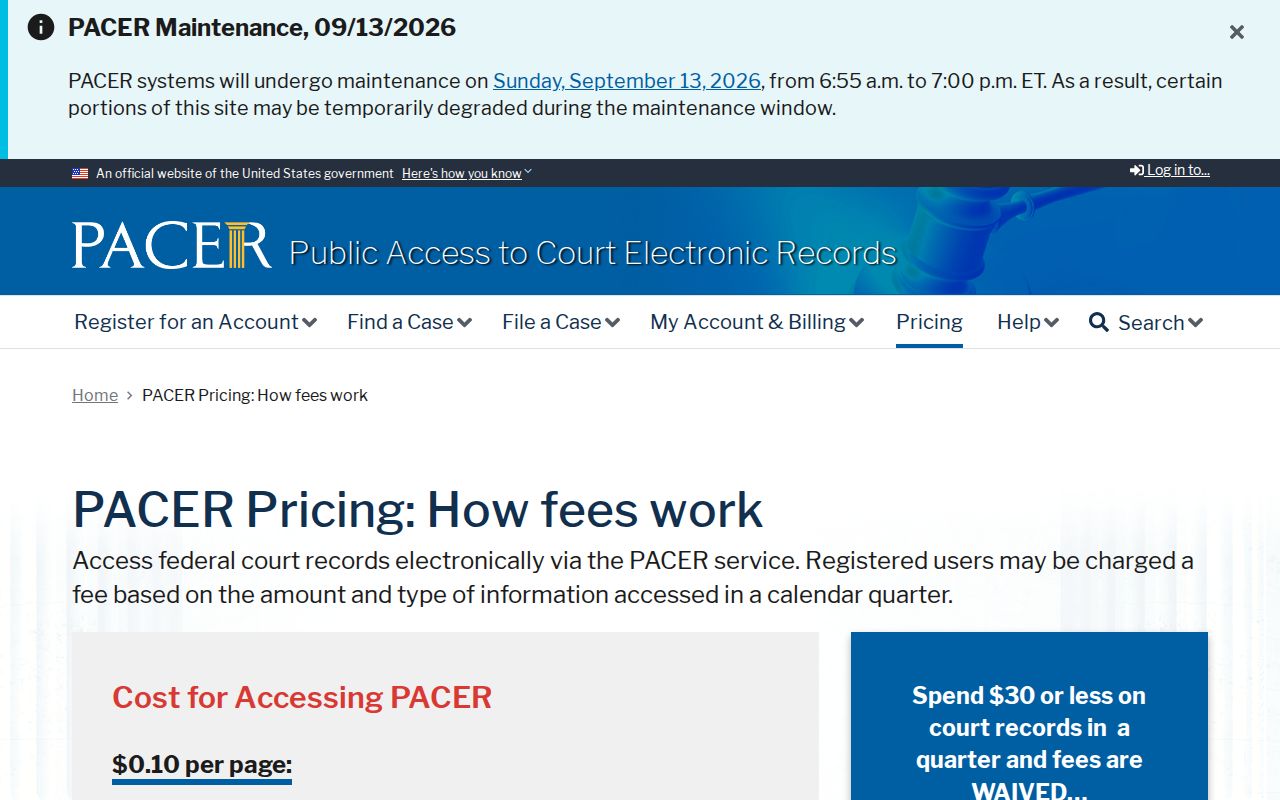
Federal dockets charge fees by the page, and the details sit on the PACER pricing page. Nothing the Muskegon County courts publish reaches that system.
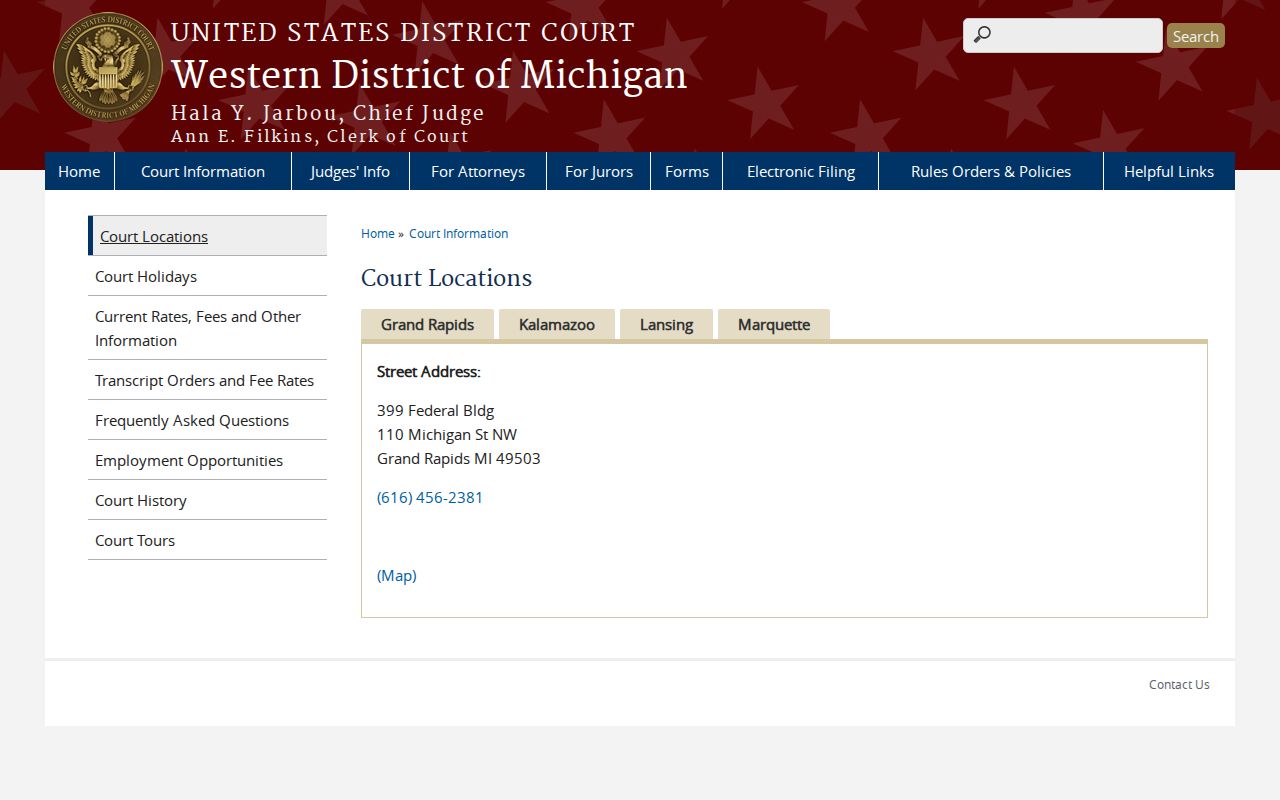
The federal courthouse serving Muskegon County appears with the court's other divisional offices on the Western District of Michigan locations page. The district posts no federal warrant roster. A task force assignment is not a published list.
When You Believe You Are Listed
Ask the Muskegon County court, not the internet. A reposted photo on a private site proves nothing about whether a warrant is still active. Some of those pages sit untouched for years.
Urgent: Do not approach anyone or try to resolve a listing on your own. Contact a lawyer and the issuing court, and ask about a scheduled appearance or a recall.
If you are the person named, a lawyer can ask the prosecutor or the court about a scheduled appearance and a bond. Muskegon County's court guidance goes further. It points people with an active District Court warrant toward a remote or scheduled appearance. Ask about that option by phone. Relatives can take the same route. Court staff often cannot share details with someone who is not the party. Expect that limit up front. Your job is gathering the case number and the notice, not receiving every detail.
Muskegon County Warrant Rosters Not Republished
Muskegon County warrant rosters are not copied onto this page, and the choice is deliberate. Two reasons drive it. The first is accuracy. Copied lists go stale. The moment a court recalls a warrant or an agency drops a name, the copy keeps the old entry, and a stale entry can trail a person long after the case closed. Fairness comes second. A booking photo or an old address adds nothing to the job of checking your own status or finding the right court in Muskegon County. When an official program does publish a list, open that page directly. Where no list exists, the court remains the real channel. Its records desks do the work that actually answers the question.